Yachty Dice Game – Yatzy
Cessabit GamesBoard
4.23.01K Reviews
- Version
- 1.3.2
- Installs
- 500.00K
- Age Rating
- Everyone 10+
Screenshots

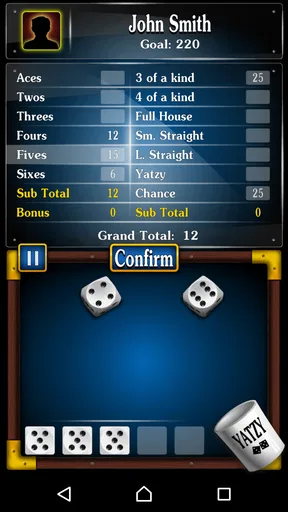
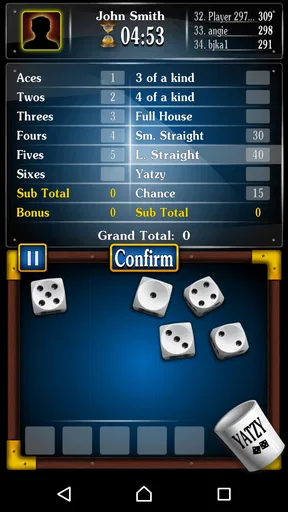
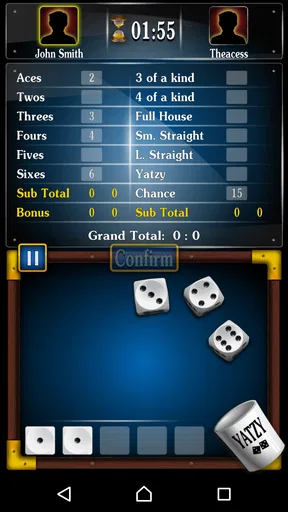
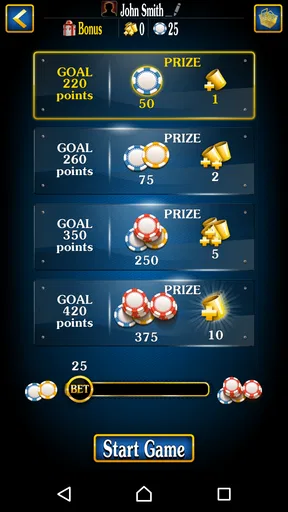
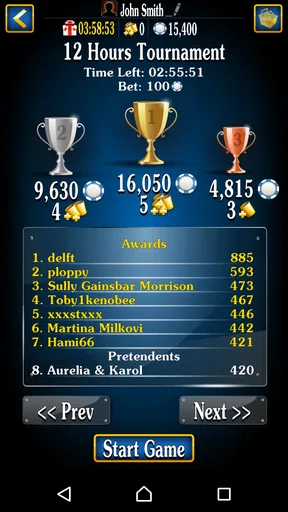

Our Review of Yachty Dice Game – Yatzy
 Analysis by Appyee
I enjoy board games that are easy to explain but still give me a reason to play one more round, and Yachty Dice Game – Yatzy fits that mood well. It is a free dice game from Cessabit Games, built around the familiar Yatzy style: roll dice, choose which results to keep, and try to make better combinations than the other players or your own previous score. I found the appeal less about flashy presentation and more about the small decisions that appear after every roll.
That simplicity makes it approachable, but it also means the game has nowhere to hide. A dice game lives or dies by how clearly it handles turns, scoring, and pressure around each choice. In my experience, this one works best when I want a quick board-game session without learning a long rulebook. It is available at no upfront cost, carries an Everyone 10+ rating, and has reached over half a million installs, so it is clearly aimed at a broad audience rather than a niche group of serious tabletop players.
How the dice format feels in everyday play
The basic rhythm is immediately recognizable to anyone who has played Yatzy or a similar dice-score game. You roll, inspect the result, decide what is worth keeping, and use the remaining rolls to chase a useful combination. That decision is the heart of the experience. Holding onto a pair may be sensible if you are building toward a larger matching set, while a promising sequence can tempt you to abandon a safer scoring option.
I like that each turn creates a compact problem instead of asking me to manage a large board or a complicated collection of resources. The game is suitable for short breaks because a single decision does not require a long setup. It also works as a casual pass-and-play activity when friends are together and nobody wants to learn a new system before starting.
The offline option is particularly useful in ordinary situations. I can imagine playing during a journey, waiting for an appointment, or sitting with a friend in a place where a reliable connection is not convenient. That makes it more flexible than many modern board games that treat online access as part of the basic experience. If your main goal is a quiet round against local opponents or the device, this format is straightforward.
There is also value in the familiar rules. Players who already know Yatzy can get moving quickly, while newcomers can understand the central idea after watching only a few turns. I would still recommend paying attention to the scoring categories rather than rolling on autopilot. The most common mistake in this type of game is treating every attractive combination as equally valuable. A good-looking roll can be less useful than a modest result that protects a difficult category later.
Small choices matter more than lucky rolls
The interesting part is not simply getting high numbers. It is deciding when to stop chasing a perfect result. For example, if the first roll gives me several matching dice, I have to weigh the chance of improving that group against the risk of wasting later opportunities. If I already have a reasonable score available, taking it can be smarter than gambling for a result that may never arrive.
My practical advice is to treat the score sheet as a plan rather than a list of boxes to fill randomly. I try to notice which kinds of combinations are becoming difficult and reserve suitable turns for them. This approach makes the game feel more strategic without pretending that skill can remove the luck involved. The dice still decide what opportunities appear; the player decides how much value to extract from them.
That balance is why the game can work for mixed groups. A child or casual player can enjoy the excitement of a strong roll, while a more experienced player can think about risk, timing, and category management. The gap between those players will not disappear, but it is less intimidating than in a complex strategy board game where early mistakes can make the rest of the match feel hopeless.
Progress without turning every round into a chore
Yachty Dice Game – Yatzy is not the kind of title I would choose for a long progression journey built around unlocking a large world. Its satisfaction comes from individual rounds and from gradually making better decisions. That is a strength if you want a repeatable game that does not demand a major time commitment.
It can also be a weakness for players who need constant new content or a strong sense of long-term advancement. A familiar dice format depends on the pleasure of replaying the same core structure with different outcomes. If that loop already feels repetitive to you, no amount of careful decision-making will completely change the experience.
The current version is 1.3.2, and the game runs on devices using Android 6.0 or later. Those details make it a practical option for people who do not use the newest phone, although performance can still depend on the individual device. I would check compatibility before planning to install it on an older handset, especially if storage or operating-system support is already a concern.
Spending, pressure, and the question of fairness
The game is free to start, but it includes in-app purchases ranging from $1.99 to $29.99 per item. That is the part I would consider carefully before handing it to a younger player or installing it on a shared device. The existence of purchases does not by itself tell me how strongly the game pushes them during play, so I would avoid assuming either a generous or aggressive approach. What can be said clearly is that optional spending is part of the product, and the listed range includes both small and substantially larger individual purchases.
For me, the sensible way to approach it is to treat the free version as the test. Play enough to decide whether the dice loop itself is enjoyable before considering any purchase. A purchase cannot fix a game that you find repetitive, and it should not be necessary to prove that the basic format suits you. If you are reviewing spending on a family device, I would enable the relevant store safeguards and make sure the person playing understands that free installation does not mean every item inside the game is free.
The idea of progress pressure matters even in a simple board game. When a title presents repeated rounds, players can begin to feel that they should keep playing after a poor result, especially if they are trying to improve a score or finish a session on a high note. My advice is to set a natural stopping point: complete a match, compare the result, and leave rather than chasing a lucky correction indefinitely.
I also prefer to separate enjoyment from spending. A good roll can feel rewarding without requiring money, and a bad roll is part of the design rather than evidence that I need an upgrade. Keeping that distinction clear helps the game remain a casual pastime instead of becoming a test of patience or a reason to buy something impulsively.
Does paid spending affect competitive fairness?
This is where I would be cautious with strong claims. The purchase range is known, but the available product details do not establish how purchases interact with competitive results, whether they change dice outcomes, or whether they provide advantages during matches. I would not describe the game as unfair based only on the presence of in-app purchases, and I would not promise that competition is entirely unaffected by spending without direct evidence.
For a fair-feeling session, I would use the simplest arrangement: agree with friends that nobody buys an advantage for the match, and focus on the choices made during the rolls. If the game is being used mainly offline, the competitive question becomes less important because the appeal is personal decision-making rather than proving superiority on a public ladder.
Compared with a physical Yatzy set, the digital version is more convenient but less transparent. With physical dice, everyone can see the roll and handle the score sheet. In an app, the software manages those parts for you, which is faster but asks you to trust the implementation. That does not make the digital version dishonest; it simply changes what players can independently observe.
Compared with a dedicated online multiplayer board-game platform, this game is more focused and less demanding. A larger platform may offer stronger social tools, matchmaking, or a wider variety of modes, while this title is attractive precisely because it keeps the central dice activity close at hand. I would choose Yachty for quick, familiar sessions, and a broader board-game service when I wanted a persistent community or many different games in one place.
Who will get the most from it?
I would recommend it to someone who enjoys probability with a light strategic layer, especially if that person wants a game that can be explained in a minute. It is a good fit for families, casual groups, and players who like comparing scores without committing to a long campaign. The Everyone 10+ classification also gives it a broad audience, though adults should still handle purchase controls when children use the device.
A realistic use case would be a small group waiting for food at a restaurant. One person can start a round, others can take turns, and the group gets a shared activity that does not require a table full of pieces. Another use is a quiet solo session while travelling offline. In both cases, the game’s main advantage is convenience: the familiar format is ready without setup, cleanup, or a physical dice cup.
I would skip it if your priority is a deep strategy game where careful planning consistently outweighs randomness. I would also look elsewhere if you want a rich story, elaborate visuals, a large campaign, or a competitive ecosystem with clearly documented ranking systems. This is a focused board-style dice game, not an all-purpose gaming platform.
Useful habits for better sessions
My first tip is to avoid deciding on a category too early. A roll can look like the beginning of a great combination, but the next result may make a different scoring route more sensible. I try to keep one flexible option open until the turn develops, rather than locking myself into a plan based on the first throw.
Second, I would pay attention to the categories that are hardest to recover later. Easy points can be tempting, but spending every turn on comfortable combinations may leave an awkward gap near the end. The best choice is not always the largest immediate score; sometimes it is the decision that prevents a future turn from becoming a complete write-off.
Third, use the offline mode deliberately if you want a calmer experience. It removes the need to organize a live match around everyone’s connection and makes the game suitable for places where internet access is inconvenient. For a social group, agree on turn order before beginning so that the app remains the focus rather than the source of confusion.
Finally, decide your spending boundary before playing. Because the game is free to install but offers individual purchases from $1.99 up to $29.99, making that decision in advance is more comfortable than reacting to a prompt in the middle of a session. I see this as basic digital housekeeping, not a criticism unique to this title.
My trust verdict after weighing the trade-offs
Yachty Dice Game – Yatzy has a clear identity: a compact, familiar dice game that can be played with buddies or offline. Cessabit Games keeps the central appeal easy to understand, and the format is accessible enough for casual players while still offering meaningful decisions about risk and scoring. Its average rating is 4.2 from around sixteen thousand ratings, which is a useful sign that many players find the core experience worthwhile, though a rating alone cannot explain whether it matches your preferences.
I appreciate that the game does not need a complicated explanation to become enjoyable. The best moments come from making a calculated choice with imperfect information, then seeing whether the dice reward patience or punish overconfidence. That small cycle is enough to support repeated short sessions, particularly when I want something more engaging than a purely automatic time filler.
My reservations are equally straightforward. The format may feel repetitive if you need frequent novelty, and the presence of in-app purchases means I would not leave spending entirely unmanaged on a family device. The purchase details also do not establish how money relates to competitive outcomes, so I would keep expectations measured and avoid presenting the game as either definitively pay-to-win or definitively untouched by spending.
Overall, I would recommend it to a friend who wants a convenient Yatzy-style game for quick solo or social rounds. I would start free, test the offline play, and decide whether the basic dice decisions remain enjoyable after several sessions. If they do, this is a pleasant board-game companion. If you are looking for deep progression, transparent competitive systems, or a large multiplayer community, a physical set or a broader board-game platform may serve you better.
Verdict
Strengths of Yachty Dice Game – Yatzy
- Simple rules make it easy for new players to start quickly.
- Short rounds fit well into brief breaks or casual sessions.
- Multiple scoring categories add variety to each turn.
- Dice animations and sound effects make rolls feel more engaging.
- Suitable for solo play when you do not have an internet connection.
Limitations of Yachty Dice Game – Yatzy
- Luck can strongly influence results, even when your strategy is good.
- Some features may be limited unless you watch ads or make purchases.
- Repeated rounds can feel predictable after extended play.
- Small text or controls may be uncomfortable on some phone screens.
- Background music and sound effects may become repetitive over time.
Similar Picks in This Category
View All
Ludo King®
Gametion4.1

Ludo
Yarsa Games4.6

Tile Master® - Matching Game
Higgs Studio3.6

Checkers Online
CC Games4.6

Dominoes
Loop Games4.7

Chess
Chess Prince4.6
Frequently Asked Questions
What is Yachty Dice Game – Yatzy?
Yachty Dice Game – Yatzy is a digital dice game based on the classic Yahtzee-style format. Players roll dice, choose which results to keep, and try to complete scoring combinations such as pairs, straights, full houses, and five-of-a-kind sets. It is designed for short, casual sessions and is easy to understand even if you have never played a dice game before.
How do you play Yachty Dice Game – Yatzy?
Each turn usually gives you several opportunities to roll the dice and improve your combination. After every roll, you decide which dice to hold and which to roll again. You then select an available scoring category, with each category normally usable only once per game. Good results are important, but choosing when to accept a modest score can be just as valuable as chasing a rare combination.
Can I play Yachty Dice Game – Yatzy offline?
The game is well suited to offline play because its core dice-rolling mechanics do not require a constant internet connection. However, certain features may depend on connectivity, including advertisements, online leaderboards, cloud synchronization, updates, or other connected services. If offline access is important to you, it is best to test the main game after temporarily disabling your connection.
Is Yachty Dice Game – Yatzy free to download and play?
Yachty Dice Game – Yatzy may be available as a free download, but free access can include advertising, optional purchases, or limits on particular features depending on the version and platform. Before downloading, check the listing for your Android or iOS device to review its current pricing, in-app purchase details, age rating, and privacy information.
Is Yachty Dice Game – Yatzy suitable for children and beginners?
The straightforward rules make Yachty Dice Game – Yatzy accessible to beginners and suitable for casual family play, although the appropriate age depends on the platform’s current rating and the way advertising or purchases are handled. Younger players may need help understanding probability and scoring categories. Parents should review permissions, advertisements, and purchase settings before allowing independent play.
Play our best games!


